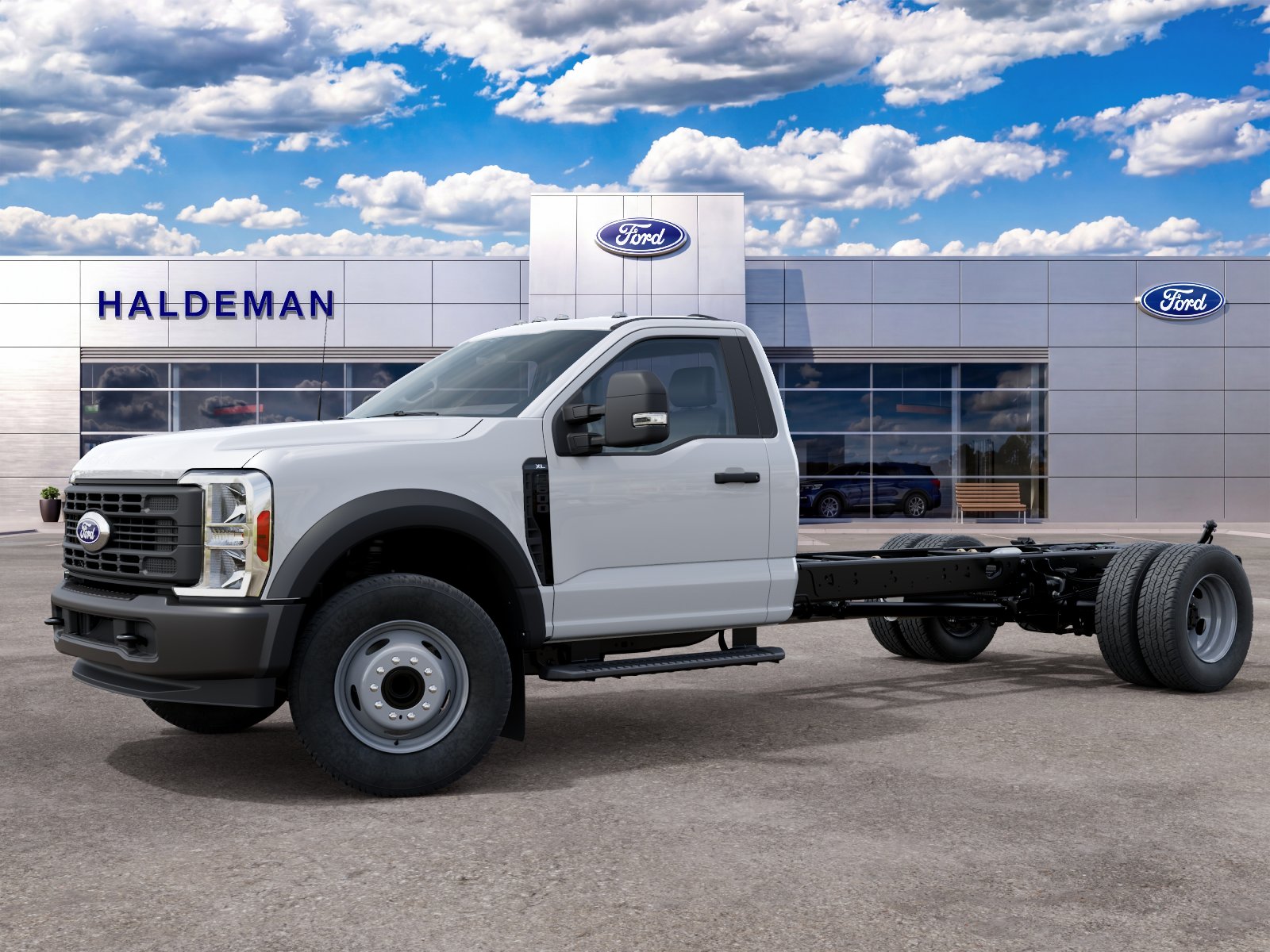
New Ford Super Duty F-600 DRW for Sale in Hightstown, NJ
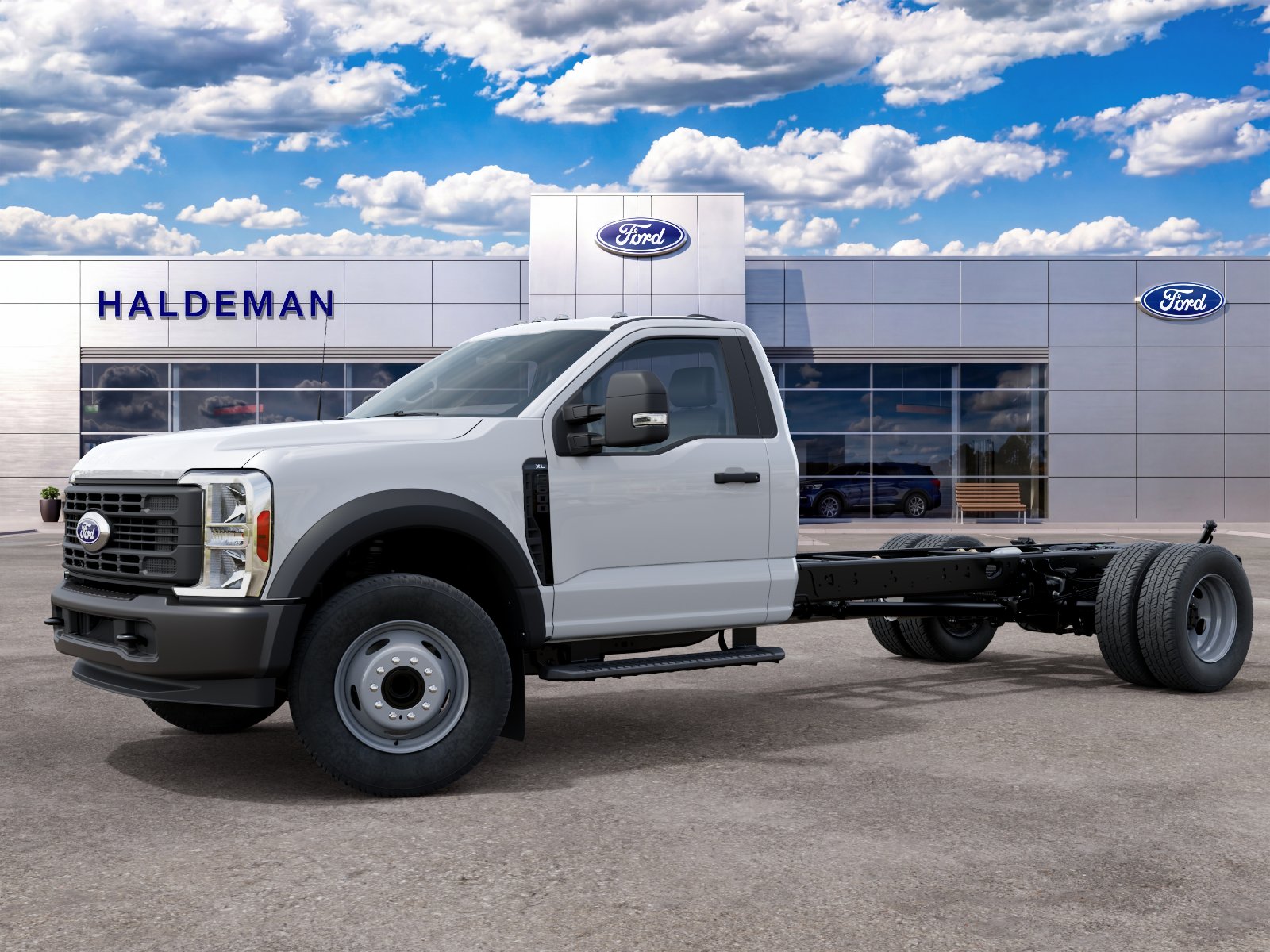
Frequently Asked Questions About New Ford Super Duty F-600 DRW in Hightstown, NJ
How do I know my fleet has outgrown the F-550?
Look at scale tickets and body plans together. If loaded trucks regularly approach the F-550 rating, or the next body you want weighs more than the current one, the F-600 deserves a look.
Can a longer box body fit on an F-600 than on an F-550?
The higher rating of the F-600 often allows a heavier body, but length depends on the wheelbase and frame chosen at order time. The body builder confirms what fits once they see the chassis specification.
Will drivers who know Super Duty pickups adjust easily to an F-600?
The cab and controls will feel familiar, so most settle in quickly. The difference is the weight behind them, which lengthens stopping distances and changes turning, so supervised practice with a loaded body is wise before solo routes.
Will my drivers need a commercial license for the F-600?
A commercial license requirement turns on details like the rating, a towed trailer and the cargo, and only the licensing agency can give a definitive answer. Confirm each driver's status with the licensing agency before the truck enters service, and keep that record with your fleet files.
Can an F-600 join a fleet that already runs F-550 trucks?
Yes, and it slots in easily since both share the Super Duty cab and many service items. Keep separate parts stock for the items that differ, such as the larger wheels and tires.
Have Additional Questions?
Walk us through a typical route: where the truck loads, how far it travels and what the last stop looks like.
Mention narrow driveways, low overhead clearances or docks the truck has to back into, because those shape the body as much as the cargo does.
Our commercial staff will turn that route into a suggested F-600 build and a short list of questions for your upfitter.
Outgrowing the F-550 Without Leaving the Super Duty Cab
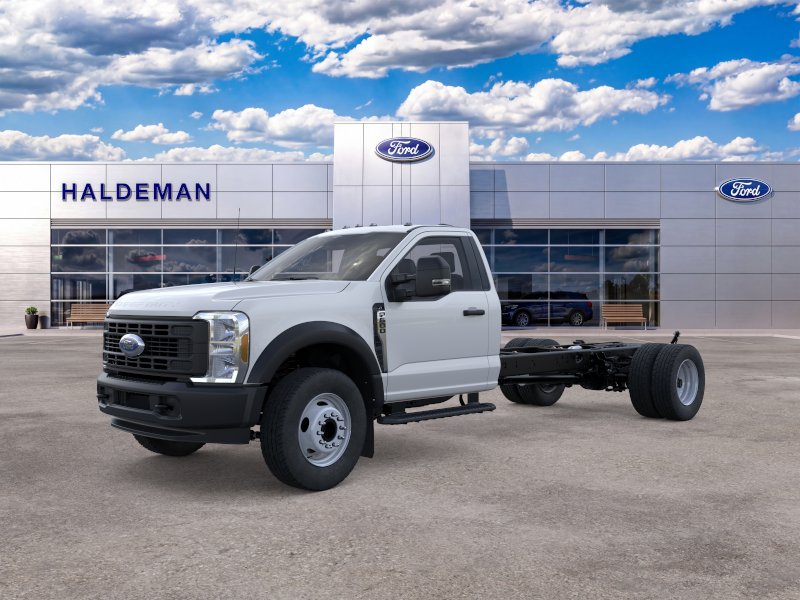
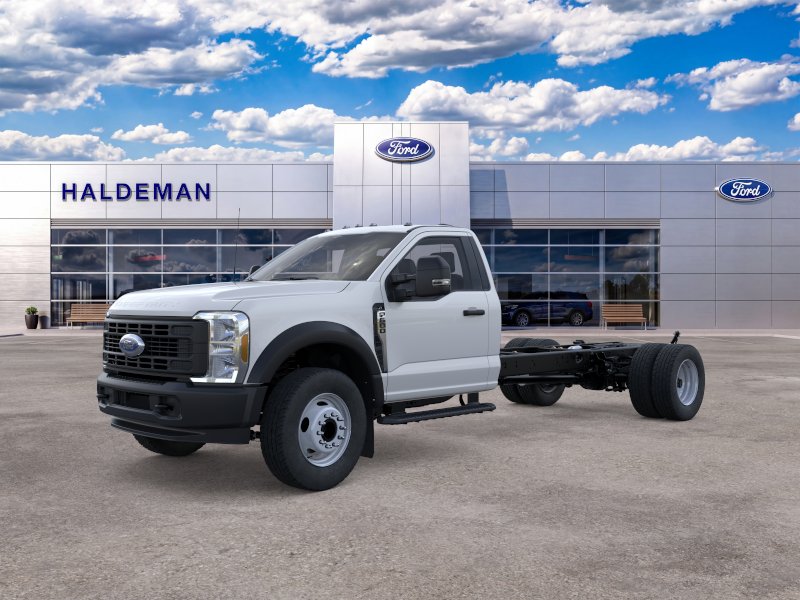
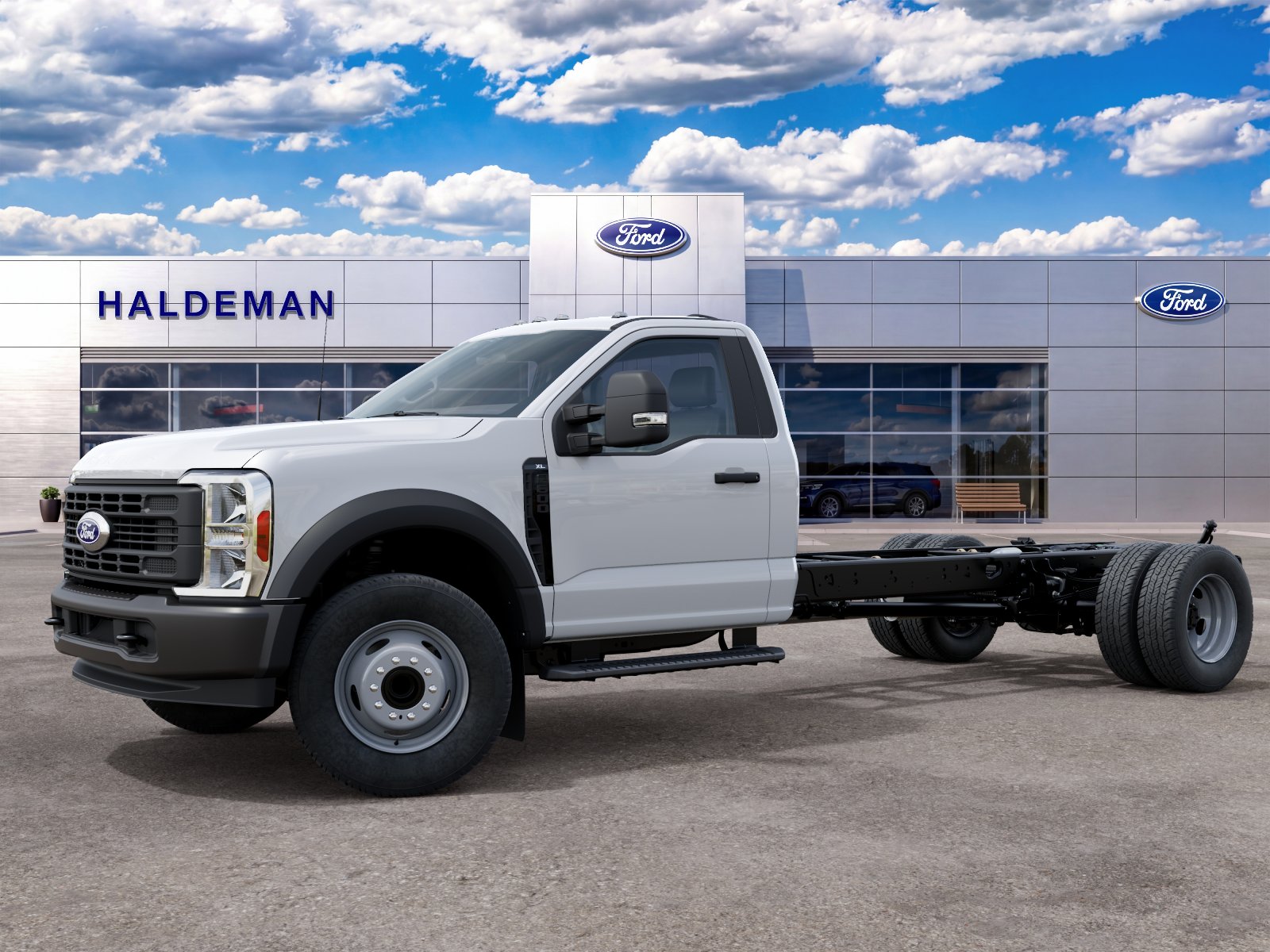
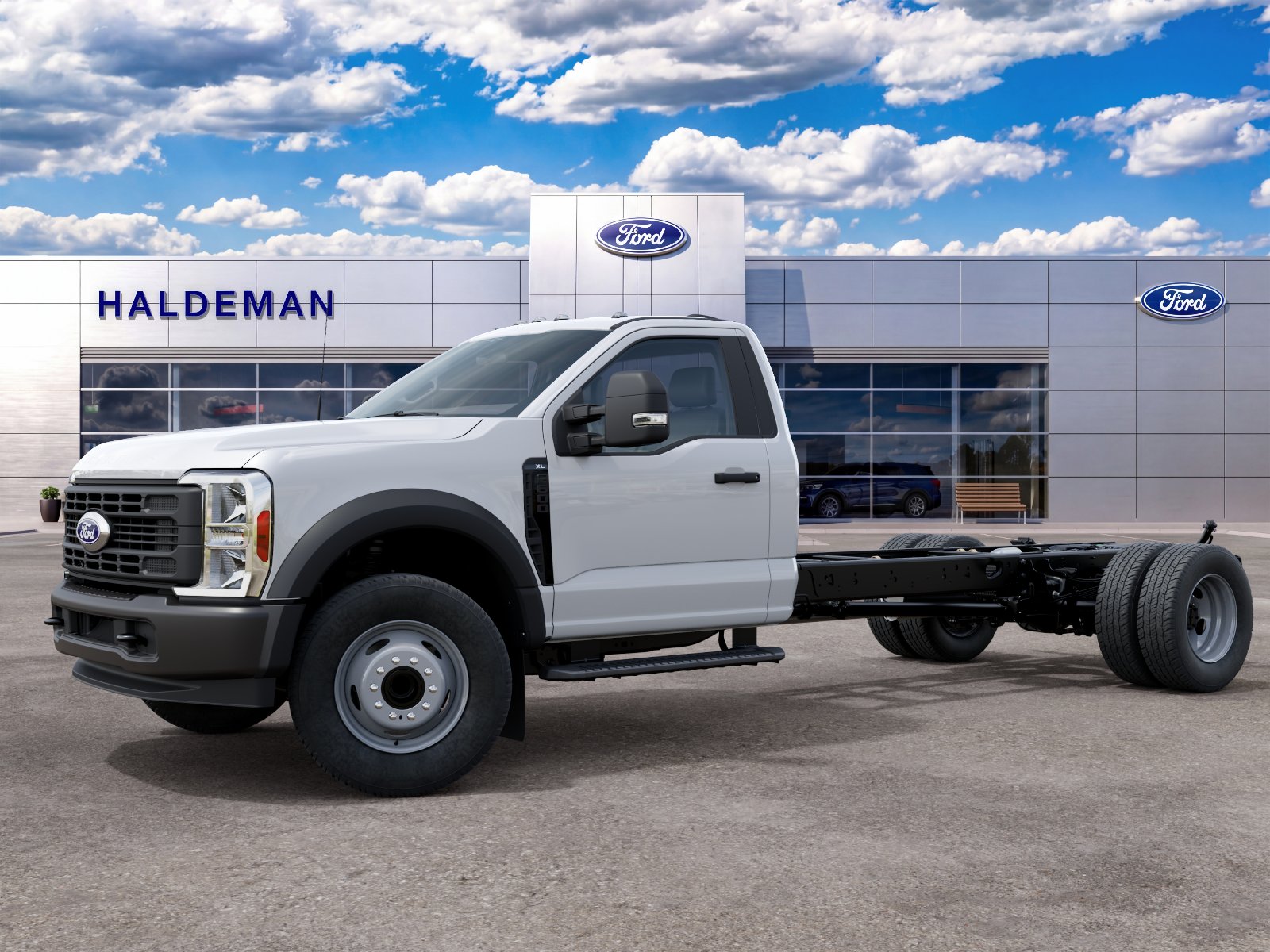
Fleets usually find the F-600 the same way. An F-550 keeps running loaded to its limit, or the next body on the plan has grown too heavy for it. The F-600 answers with a higher weight rating while keeping the Super Duty cab your drivers already use around Hightstown, which means more truck behind the cab with nothing new to learn in front of it.
What changes sits under and behind the cab. The F-600 uses heavier-duty components chosen to carry more weight, along with larger commercial wheels and tires, and its rating opens the door to longer box bodies and bigger dump bodies. Our staff will walk through the published ratings for a given build so you can see where the extra capacity comes from.
- A box body that keeps creeping longer to fit more stops on each route is a common sign the fleet has reached the edge of what an F-550 can carry
- Mixing F-550 and F-600 units in one yard stays simple when both wear the same cab, since mirrors, switches and dash layouts feel identical to the crew
- The larger wheels on the F-600 take a different tire size than the lighter Super Duty trucks, so plan spare inventory and roadside service accordingly
If the F-550 already carries its loads comfortably, keep it. The F-600 belongs where the body, the cargo and any mounted equipment add up to more than the F-550 rating allows, which an upfitter can calculate from the drawings before anything is ordered. That check takes little time and can keep a fleet from buying more chassis than its work requires.
Moving up to the F-600 adds capacity without asking drivers to learn a new truck. For many growing fleets, that pairing is the whole case.
Sizing Bigger Bodies for the Heavier Chassis
Common F-600 bodies include longer box bodies with liftgates for furniture and appliance delivery, larger dump bodies for site work, stake bodies for nursery stock and pallets, and heavy utility bodies carrying cranes. Each one adds its own weight before any cargo goes in, and that empty weight decides how much the finished truck can still haul.
Before ordering, gather the body builder's drawings, the empty body weight and the heaviest typical cargo. Haldeman Ford of East Windsor uses those to match wheelbase and cab style to the body and confirm the build fits under the F-600 rating. Ordering is common at this size, though our staff will also check stock and incoming units for a match.
- Liftgates add weight at the very back of the frame, so a delivery fleet should count the gate when sizing the body and the load it carries
- A crew cab F-600 gives a delivery helper or a line crew a seat inside, at the cost of some frame length behind the cab for the body
- A body that rises above the cab roof changes how the truck clears canopies, parking decks and low branches, so check overhead clearance along the routes it will run
Bigger bodies also change how the truck gets loaded. Forklifts at a dock, hand trucks at a curb and loader buckets on a job site each favor different floor heights and door placements, so tell the upfitter how cargo goes on and comes off.
The right body on the F-600 fills its rating without crowding it. Getting that balance on paper first saves rework at the upfitter.
Routes Out of the Exit 8A Warehouse Corridor
The warehouses and distribution centers near Exit 8A ship freight around the clock, and much of the last leg runs on trucks smaller than a tractor-trailer. Delivery contractors working that corridor load pallets onto box trucks bound for stores, homes and job sites across central New Jersey. The F-600 suits those routes when the box and its load outgrow a lighter chassis.
A route out of Exit 8A can mix fast highway miles with tight residential streets and crowded loading areas in the same shift. That mix shapes the build: wheelbase affects turning at delivery stops, while body length and height decide which docks and driveways the truck can use without a spotter.
- Warehouse docks often schedule pickups in tight windows, so a truck that starts reliably on cold mornings keeps a delivery contractor in good standing with the shipper
- Drivers who back into narrow loading doors several times a shift benefit from a rear camera and backup alarm, especially when nobody is available to guide them
- Contractors who bid on new routes can size one F-600 for the toughest stop on the list, so the same truck can rotate onto easier routes later
Describe a typical route to our commercial staff: how many stops, how much highway driving, how tight the delivery sites are. Those details shape the wheelbase and body length more than any brochure can. If the fleet runs telematics, a few weeks of stop and mileage data from the current trucks gives an even clearer picture.
The corridor keeps growing, and so do the loads leaving it. A chassis sized to the route keeps those deliveries on schedule.
Putting New Drivers Behind a Familiar Wheel
The F-600 shares its cab with the rest of the Super Duty line, so the switches, mirrors, seat and dashboard look like those in a heavy-duty pickup. For fleets that hire from a wide pool, that familiarity shortens the learning curve. Training can focus on the body, the load and the route, since the controls already make sense to anyone who has driven a big Ford pickup.
Licensing questions come up more often at this end of the Super Duty line. What a driver needs can depend on the truck's weight rating, what it tows and the kind of cargo aboard, and those rules come from state and federal agencies. We can point you to the right offices, and every fleet should confirm requirements before assigning drivers.
- Pair each new driver with an experienced one for the first few routes, since a heavier truck stops and turns differently even when the cab feels familiar
- Keep the owner's guide and the body builder's operating instructions in every truck so drivers can check hoist, liftgate and warning light procedures on the road
- Driver-assist features offered on Super Duty cabs can help in heavy traffic, though no system replaces mirror checks and a careful walk around the truck before each shift
Fleets that mix F-550 and F-600 units can train drivers once and assign them to either truck, as long as the bodies operate in similar ways. That flexibility helps when someone calls out sick on a busy day. It also lets a dispatcher reassign trucks during a breakdown without worrying whether the replacement driver has handled that cab before.
A heavier truck with a familiar cab lets fleets grow capacity without starting driver training from scratch. That combination is the main argument for the F-600.
Service, Financing and Retiring the Older Units
Heavier trucks running full routes need maintenance on a plan. The service department at Haldeman Ford of East Windsor can set up visits around your dispatch schedule, follow severe-duty intervals from the owner's guide and keep each unit's history together. Servicing several trucks on a rotation means the yard never loses more than one at a time.
Commercial financing for an F-600 usually looks at the business, its history and the trucks it already runs. Our finance office explains loan options in plain terms and lists the documents to bring. Larger orders spread across several deliveries can be arranged to match when each truck actually arrives.
- Brake inspections should follow load and stop counts, because a delivery truck making constant stops wears brakes far faster than one cruising the open highway
- Trade-in units with bodies still mounted are appraised as complete trucks, and our staff will note how the body's condition affects the value
- Retiring an F-550 that outgrew its work toward a new F-600 can keep the body builder relationship intact, since many upfitters build for both chassis
When an older truck comes out of service, Haldeman Ford of East Windsor can appraise it and apply the value toward the new F-600. Fleets replacing several units can plan trade-ins in stages as each new truck is delivered. The appraisal conversation also covers how mileage, body wear and service records shape what each outgoing unit brings.
The F-600 is built for fleets whose loads have outgrown the rest of the Super Duty line. Keep it serviced, financed sensibly and staffed with drivers who already know the cab, and it carries that bigger load for years.
Fleets ready to move past the F-550 can start the conversation with Haldeman Ford of East Windsor by phone or at the store. Share the route, the body plan and the loads, and our commercial staff will map out an F-600 that carries them.